33-Rust 教程 - 异步编程基础

33-Rust 教程 - 异步编程基础

LarryLan
发布于 2026-06-03 18:27:51
发布于 2026-06-03 18:27:51
异步编程基础
"线程是雇佣员工,异步是让自己变成章鱼——八只手同时干活"
🎬 引入
前面我们学了线程并发,现在来思考一个问题:
如果你想同时处理 10000 个网络连接,用线程会怎样?
- 10000 个线程
- 每个线程占用栈内存(默认 2MB)
- 总共需要 20GB 内存!
- 操作系统调度开销巨大
这显然不现实。
那怎么办?异步编程登场了!
生活化类比:
想象你在等外卖:
同步方式(线程阻塞):
你:点外卖
你:站在门口等(阻塞)
30 分钟后:外卖到了
你:吃饭
异步方式(async/await):
你:点外卖
你:继续打游戏(不阻塞)
30 分钟后:外卖到了(回调/通知)
你:暂停游戏,吃饭
异步的核心思想是:在等待 I/O 的时候,去做别的事情,而不是干等着。
Rust 的异步编程基于 Future 和 async/await 语法。今天我们就来学习这些概念,以及背后的 Pin 和 Waker 机制。
📌 核心概念
什么是 Future?
Future 是一个可能还没完成的计算。它代表一个将来会有结果的值。
类比:
- Future = 外卖订单
.await= 等外卖送到- 结果 = 热腾腾的饭菜
Future 有三个状态:
- Pending:还没完成(外卖还在路上)
- Ready:完成了,有结果(外卖到了)
- Cancelled:取消了(你退单了)
async/await 是什么?
async 和 await 是 Rust 的语法糖,让异步代码写起来像同步代码。
// 同步代码
fn read_file() -> String {
    // 阻塞读取
    std::fs::read_to_string("file.txt").unwrap()
}

// 异步代码
async fn read_file() -> String {
    // 非阻塞读取
    tokio::fs::read_to_string("file.txt").await.unwrap()
}
关键区别:
async fn返回一个 Future,不会立即执行.await会"等待"Future 完成,但不阻塞线程
异步运行时(Async Runtime)
Future 本身不会自己运行,需要异步运行时来驱动。
类比:
- Future = 外卖订单
- 异步运行时 = 外卖平台调度系统
常见的 Rust 异步运行时:
- Tokio:最流行,功能全面
- async-std:标准库的异步版本
- smol:轻量级
Pin 是什么?
Pin 是 Rust 异步编程中最难理解的概念之一。
为什么需要 Pin?
有些类型在内存中的位置是固定的,不能移动。比如:
- 自引用结构体(结构体里有指向自己的指针)
- Future 内部可能有自引用
类比:
- 普通值 = 可以随便搬家的家具
- Pin 的值 = 固定在地上的保险箱(不能移动)
Waker 是什么?
Waker 是一个通知机制。当 Future 准备好时,用它来通知运行时。
工作流程:
- Future 还没准备好,返回
Poll::Pending - Future 注册一个 Waker
- 当数据准备好时,调用 Waker 通知运行时
- 运行时重新调度这个 Future
类比:
- Waker = 外卖员的电话
- 外卖到了,打电话通知你
- 你收到通知,去取外卖
💻 代码示例
基础 async/await
use std::time::Duration;

// 异步函数
async fn say_hello() {
    println!("你好!");
}

// 带返回值的异步函数
async fn add(a: i32, b: i32) -> i32 {
    a + b
}

// 异步函数可以 await 其他异步函数
async fn greet_and_add() -> i32 {
    say_hello().await;
    add(, ).await
}

#[tokio::main]
async fn main() {
    greet_and_add().await;
}
注意: async fn 返回的是 Future,需要 .await 或运行时来执行。
并发执行多个 Future
use tokio::time::{sleep, Duration};

async fn task1() {
    println!("任务 1 开始");
    sleep(Duration::from_millis()).await;
    println!("任务 1 完成");
}

async fn task2() {
    println!("任务 2 开始");
    sleep(Duration::from_millis()).await;
    println!("任务 2 完成");
}

#[tokio::main]
async fn main() {
    // 方式 1:顺序执行(总耗时 250ms)
    // task1().await;
    // task2().await;

    // 方式 2:并发执行(总耗时 150ms)
    tokio::join!(task1(), task2());

    // 方式 3:选择第一个完成的
    // tokio::select! {
    //     _ = task1() => println!("任务 1 先完成"),
    //     _ = task2() => println!("任务 2 先完成"),
    // }
}
Future 的组合
use tokio::time::{sleep, Duration};

async fn fetch_data(id: i32) -> String {
    sleep(Duration::from_millis()).await;
    format!("数据 {}", id)
}

#[tokio::main]
async fn main() {
    // 并发获取多个数据
    let results = tokio::join!(
        fetch_data(),
        fetch_data(),
        fetch_data(),
    );

    println!("{:?}", results);

    // 使用 futures crate
    use futures::future::{join_all, try_join_all};

    let futures = vec![
        fetch_data(),
        fetch_data(),
        fetch_data(),
    ];

    let results = join_all(futures).await;
    println!("{:?}", results);
}
异步 I/O 示例
use tokio::fs::File;
use tokio::io::{AsyncBufReadExt, BufReader};

async fn read_file_async() -> std::io::Result<()> {
    let file = File::open("Cargo.toml").await?;
    let reader = BufReader::new(file);
    let mut lines = reader.lines();

    while let Some(line) = lines.next_line().await? {
        println!("{}", line);
    }

    Ok(())
}

#[tokio::main]
async fn main() {
    if let Err(e) = read_file_async().await {
        eprintln!("读取文件失败:{}", e);
    }
}
实现一个简单的 Future
use std::future::Future;
use std::pin::Pin;
use std::task::{Context, Poll};
use std::time::{Duration, Instant};

// 一个简单的计时器 Future
struct Timer {
    when: Instant,
}

impl Timer {
    fn new(duration: Duration) -> Self {
        Timer {
            when: Instant::now() + duration,
        }
    }
}

impl Future for Timer {
    type Output = ();

    fn poll(self: Pin<&mut Self>, cx: &mut Context<'_>) -> Poll<Self::Output> {
        if Instant::now() >= self.when {
            println!("时间到!");
            Poll::Ready(())
        } else {
            // 注册 Waker,时间到时通知
            cx.waker().wake_by_ref();
            Poll::Pending
        }
    }
}

#[tokio::main]
async fn main() {
    println!("开始计时 1 秒...");
    Timer::new(Duration::from_secs()).await;
    println!("计时完成!");
}
注意: 上面的实现会 busy-wait(不断轮询),实际应该用定时器注册真正的事件通知。
Pin 的使用示例
use std::pin::Pin;

// 自引用结构体
struct SelfReferential {
    data: String,
    ptr: *const u8,  // 指向 data 的指针
}

impl SelfReferential {
    fn new(data: String) -> Self {
        let ptr = data.as_ptr();
        SelfReferential { data, ptr }
    }

    fn get_ptr(&self) -> *const u8 {
        self.ptr
    }
}

// ❌ 错误:移动后指针失效
fn broken_example() {
    let mut sr = SelfReferential::new("hello".to_string());
    let ptr1 = sr.get_ptr();

    // 移动 sr
    let sr2 = sr;  // sr 被移动了

    // ptr1 现在指向无效的内存!
    // println!("{:?}", *ptr1);  // ❌ 未定义行为
}

// ✅ 正确:用 Pin 固定
fn fixed_example() {
    use std::pin::Pin;
    use std::boxed::Box;

    // 把结构体放在堆上并固定
    let mut pinned = Box::pin(SelfReferential::new("hello".to_string()));
    let ptr = pinned.get_ptr();

    // 即使移动 pinned,指针仍然有效
    let pinned2 = pinned;

    // 安全:结构体没有被移动
    unsafe {
        println!("{:?}", *ptr);
    }
}
🐛 常见坑点
坑点 1:忘记 await
async fn fetch_data() -> String {
    "data".to_string()
}

#[tokio::main]
async fn main() {
    // ❌ 错误:忘记 await
    // let data = fetch_data();  // data 是 Future,不是 String

    // ✅ 正确
    let data = fetch_data().await;
    println!("{}", data);
}
坑点 2:在同步上下文中调用异步函数
fn sync_function() {
    // ❌ 错误:不能在同步函数中 await
    // let data = fetch_data().await;
}

// ✅ 正确:用运行时阻塞执行
fn sync_function() {
    let rt = tokio::runtime::Runtime::new().unwrap();
    let data = rt.block_on(fetch_data());
}
坑点 3:阻塞异步运行时
#[tokio::main]
async fn main() {
    // ❌ 错误:阻塞整个运行时
    // std::thread::sleep(Duration::from_secs(1));

    // ✅ 正确:用异步 sleep
    // tokio::time::sleep(Duration::from_secs(1)).await;

    // 如果必须用阻塞操作,用 spawn_blocking
    tokio::task::spawn_blocking(|| {
        std::thread::sleep(Duration::from_secs());
    }).await.unwrap();
}
坑点 4:Send trait 问题
use std::rc::Rc;

async fn bad_example() {
    // ❌ Rc 不是 Send,不能跨线程
    // let data = Rc::new(5);
    // tokio::spawn(async move {
    //     println!("{}", data);
    // });

    // ✅ 用 Arc
    use std::sync::Arc;
    let data = Arc::new();
    tokio::spawn(async move {
        println!("{}", data);
    }).await.unwrap();
}
🎯 实战案例
案例 1:并发 HTTP 请求
use reqwest;
use tokio;

async fn fetch_url(url: &str) -> Result<String, reqwest::Error> {
    let response = reqwest::get(url).await?;
    response.text().await
}

#[tokio::main]
async fn main() -> Result<(), Box<dyn std::error::Error>> {
    let urls = vec![
        "https://example.com",
        "https://example.org",
        "https://example.net",
    ];

    // 并发请求所有 URL
    let futures: Vec<_> = urls
        .iter()
        .map(|url| fetch_url(url))
        .collect();

    let results = futures::future::join_all(futures).await;

    for (url, result) in urls.iter().zip(results) {
        match result {
            Ok(content) => println!("{}: {} bytes", url, content.len()),
            Err(e) => println!("{} 失败:{}", url, e),
        }
    }

    Ok(())
}
案例 2:异步 TCP 服务器
use tokio::io::{AsyncBufReadExt, AsyncWriteExt, BufReader};
use tokio::net::TcpListener;

#[tokio::main]
async fn main() -> std::io::Result<()> {
    let listener = TcpListener::bind("127.0.0.1:8080").await?;
    println!("服务器监听 127.0.0.1:8080");

    loop {
        let (socket, addr) = listener.accept().await?;
        println!("新连接:{}", addr);

        // 为每个连接 spawn 一个任务
        tokio::spawn(async move {
            let (mut reader, mut writer) = socket.into_split();
            let mut buf_reader = BufReader::new(reader);
            let mut line = String::new();

            loop {
                line.clear();
                match buf_reader.read_line(&mut line).await {
                    Ok() => break,  // 连接关闭
                    Ok(_) => {
                        let response = format!("收到:{}", line);
                        writer.write_all(response.as_bytes()).await.unwrap();
                    }
                    Err(e) => {
                        eprintln!("读取错误:{}", e);
                        break;
                    }
                }
            }
        });
    }
}
案例 3:带超时的异步操作
use tokio::time::{timeout, Duration};

async fn slow_operation() -> String {
    tokio::time::sleep(Duration::from_secs()).await;
    "完成".to_string()
}

#[tokio::main]
async fn main() {
    // 设置 2 秒超时
    match timeout(Duration::from_secs(), slow_operation()).await {
        Ok(result) => println!("操作完成:{}", result),
        Err(_) => println!("操作超时!"),
    }
}
案例 4:异步通道
use tokio::sync::mpsc;

#[tokio::main]
async fn main() {
    let (tx, mut rx) = mpsc::channel();  // 缓冲区大小 32

    // 生产者
    let producer = tokio::spawn(async move {
        for i in .. {
            tx.send(i).await.unwrap();
            tokio::time::sleep(tokio::time::Duration::from_millis()).await;
        }
    });

    // 消费者
    let consumer = tokio::spawn(async move {
        while let Some(value) = rx.recv().await {
            println!("收到:{}", value);
        }
    });

    producer.await.unwrap();
    consumer.await.unwrap();
}
🧠 思维导图
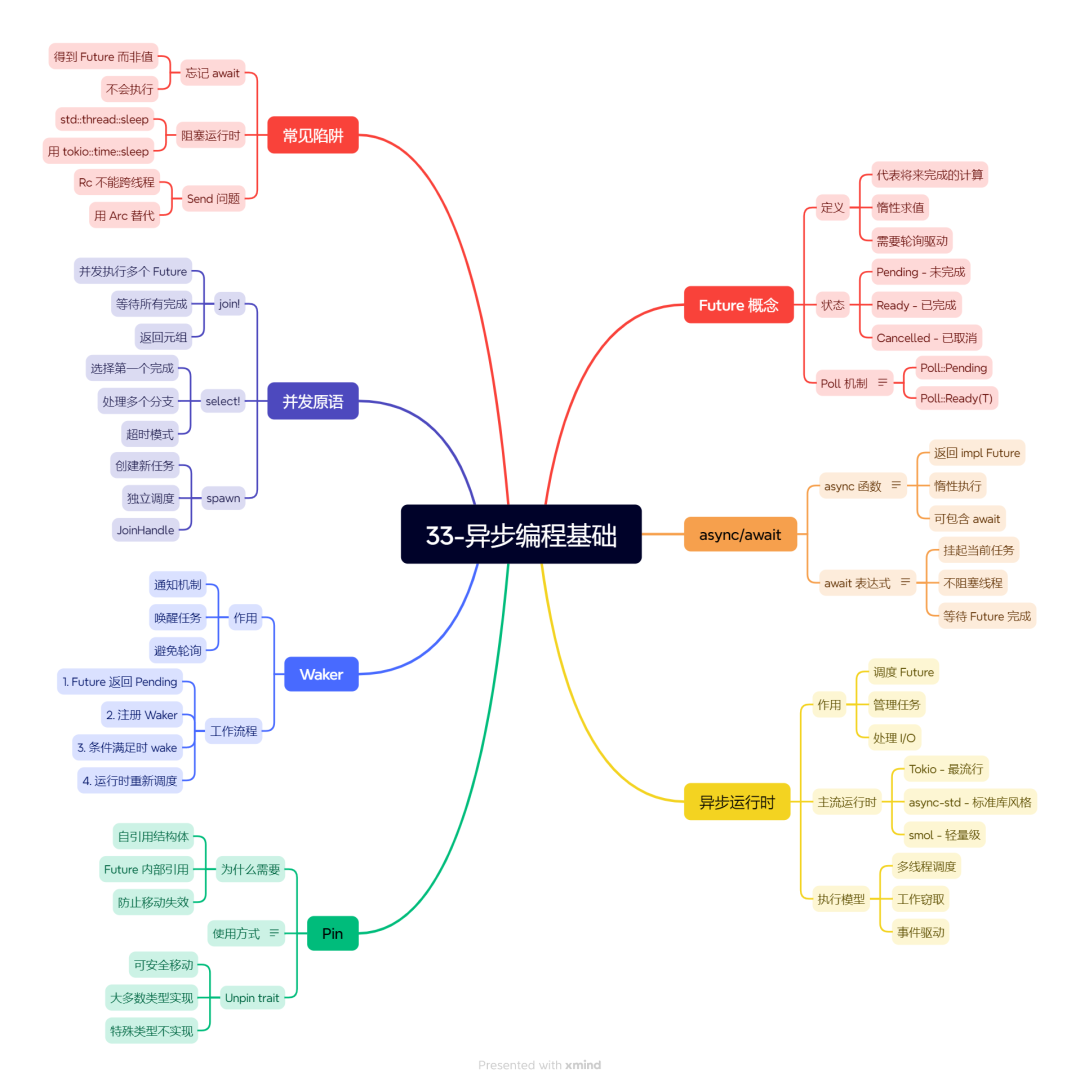
33-异步编程基础
📝 小结
- Future 代表将来的值,有 Pending 和 Ready 两种状态。
- async/await 是语法糖,让异步代码写起来像同步代码。
- 异步运行时驱动 Future,常见的有 Tokio 和 async-std。
- Pin 固定内存位置,防止自引用结构体失效。
- Waker 是通知机制,Future 准备好时通知运行时。
- 不要阻塞异步运行时,用
spawn_blocking处理阻塞操作。
下篇预告: 异步基础学完了,但实际开发中用什么库?Tokio 和 async-std 有什么区别?如何选择?下篇我们深入异步生态,学习主流框架和实战案例!
🔗 参考资料
- Rust Async Book
- Tokio 文档
- Future trait 文档
- Pin 和 Unpin
本文参与 腾讯云自媒体同步曝光计划,分享自微信公众号。
原始发表:2026-06-01,如有侵权请联系 cloudcommunity@tencent.com 删除
目录
腾讯云开发者

Copyright © 2013 - 2026 Tencent Cloud. All Rights Reserved. 腾讯云 版权所有
深圳市腾讯计算机系统有限公司 ICP备案/许可证号:粤B2-20090059  粤公网安备44030502008569号
腾讯云计算(北京)有限责任公司 京ICP证150476号 | 京ICP备11018762号