
将JSON表转换为JSON树
将JSON表转换为JSON树
提问于 2022-01-30 15:52:29
我有一个JSON格式的SQL查询结果
value = [
    {"Machine": "Mach 1", "Device": "Dev a", "Identifier": "HMI 1"},
    {"Machine": "Mach 1", "Device": "Dev a", "Identifier": "HMI 2"},
    {"Machine": "Mach 1", "Device": "Dev b", "Identifier": "HMI 3"},
    {"Machine": "Mach 1", "Device": "Dev c", "Identifier": "HMI 5"},
    {"Machine": "Mach 2", "Device": "Dev c", "Identifier": "HMI 6"},
    {"Machine": "Mach 2", "Device": "Dev d", "Identifier": "HMI 7"},
    {"Machine": "Mach 3", "Device": "Dev e", "Identifier": "HMI 8"}
]
我试图生成一棵表格树:
Tree to be generated
[ ]- Mach 1
 +[ ]- Dev a
 |  +-- HMI 2
 |  +-- HMI 3
 +[ ]- Dev c
    +-- HMI 5
[ ]- Mach 2
 +[ ]- Dev c
 |  +-- HMI 6
 +[ ]- Dev d
 |  +-- HMI 7
 +[ ]- Dev e
+-- HMI 8函数的输出将由归纳自动化的透视树组件使用,它期望它的格式是:
items = [
  {
    "label": "Mach 1",
    "expanded": true,
    "data": "",
    "items": [
      {
        "label": "Dev a",
        "expanded": true,
        "data": "",
        "items": [
          {
            "label": "HMI 1",
            "expanded": true,
            "data": {
              "Identifier": "HMI1",
              "Device": "Dev a",
              "Machine": "Mach 1"
            },
            "items": []
          },
          {
            "label": "HMI 2",
            "expanded": true,
            "data": {
              "Identifier": "HMI2",
              "Device": "Dev a",
              "Machine": "Mach 1"
            },
            "items": []
          }

        ]
      },
      {
        "label": "Dev b",
        "expanded": true,
        "data": "",
        "items": [
          {
            "label": "HMI 3",
            "expanded": true,
            "data": {
              "Identifier": "HMI3",
              "Device": "Dev b",
              "Machine": "Mach 1"
            },
            "items": []
          }
        ]
      }

    ]
  },

…
我已经为树形深度为3的树创建了一些线性Python代码,但我想修改它,使其能够自动处理SQL查询返回的树深度从1到6(大约)。(上面的样本输入和输出是三级的。)不幸的是,我不知道如何修改它以处理变量数的列的递归。
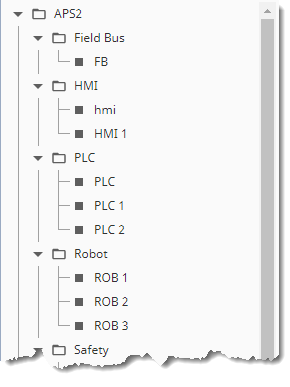
图1.我的惰性代码的结果(可根据请求获得)。
有人能建议一种使用Python (我正在使用的点火应用程序的脚本语言)的方法吗?
非常感谢。
回答 1
Stack Overflow用户
回答已采纳
发布于 2022-01-30 18:45:09
您需要提供使用键在层次结构中向下钻取的顺序。这是一个很好的实践,因为字典中的键顺序可能不代表所需的顺序。
一旦将这些键作为列表,就可以使用它迭代地深入到层次结构中。
def makeForest(values, levels):
    items = []  # The top level result array
    paths = {}  # Objects keyed by path
    root = { "items": items }  # Dummy: super root of the forest
    for data in values:
        parent = root
        path = ""
        for key in levels:
            label = data[key]
            path += repr([label])
            node = paths.get(path, None)
            if not node:
                node = {
                    "label": data[key],
                    "expanded": True,
                    "data": "",
                    "items": []
                }
                paths[path] = node
                parent["items"].append(node)
            parent = node
        parent["data"] = data
    return items

# Example use:
value = [{"Machine": "Mach 1", "Device": "Dev a", "Identifier": "HMI 1"},{"Machine": "Mach 1", "Device": "Dev a", "Identifier": "HMI 2"},{"Machine": "Mach 1", "Device": "Dev b", "Identifier": "HMI 3"},{"Machine": "Mach 1", "Device": "Dev c", "Identifier": "HMI 5"},{"Machine": "Mach 2", "Device": "Dev c", "Identifier": "HMI 6"},{"Machine": "Mach 2", "Device": "Dev d", "Identifier": "HMI 7"},{"Machine": "Mach 3", "Device": "Dev e", "Identifier": "HMI 8"}]
forest = makeForest(value, ["Machine", "Device", "Identifier"])
print(forest)页面原文内容由Stack Overflow提供。腾讯云小微IT领域专用引擎提供翻译支持
原文链接:
https://stackoverflow.com/questions/70916315
复制相关文章
相似问题
腾讯云开发者

Copyright © 2013 - 2026 Tencent Cloud. All Rights Reserved. 腾讯云 版权所有
深圳市腾讯计算机系统有限公司 ICP备案/许可证号:粤B2-20090059  粤公网安备44030502008569号
腾讯云计算(北京)有限责任公司 京ICP证150476号 | 京ICP备11018762号